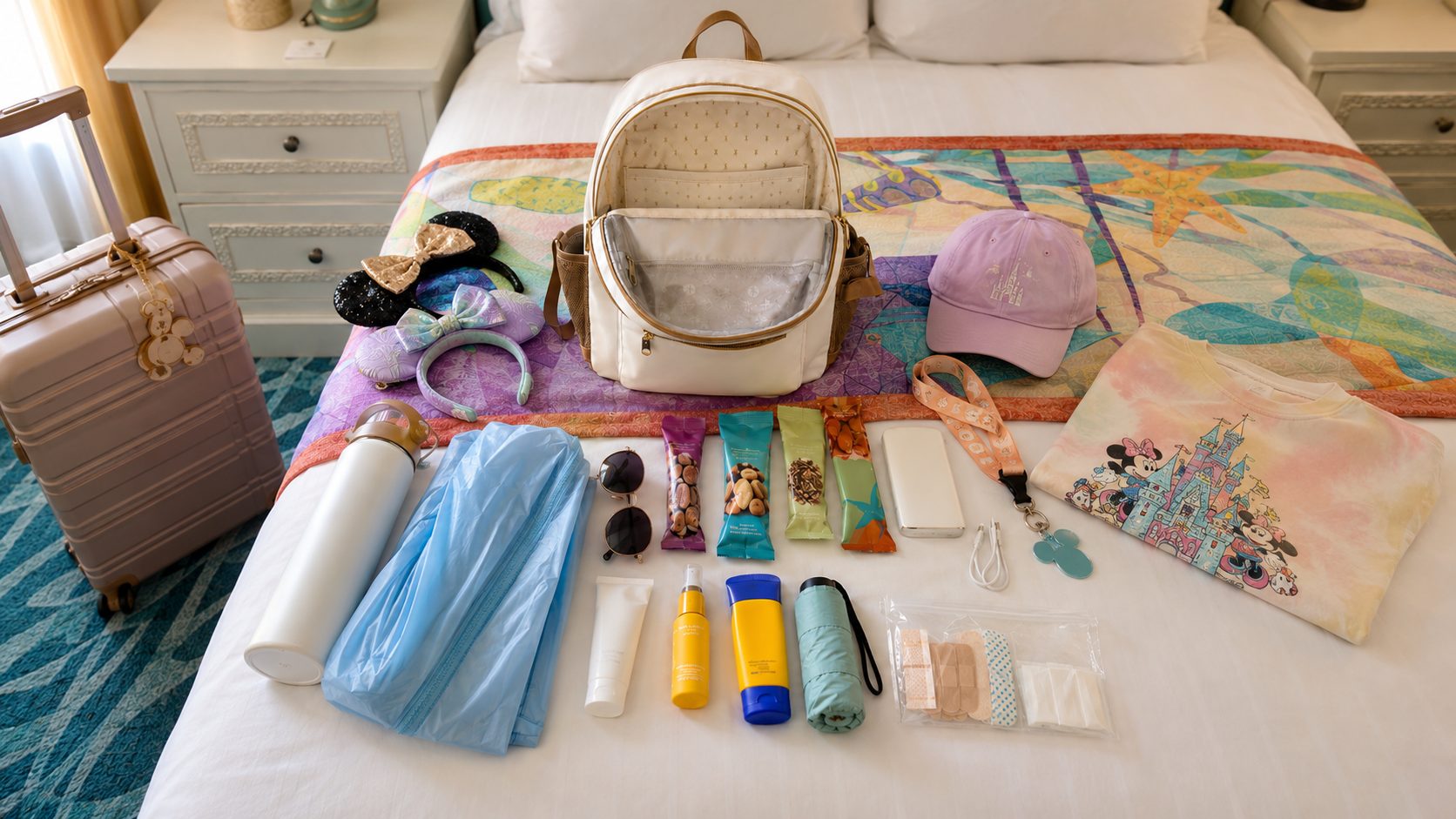
What you wear to a Disney park determines how much your feet hurt, how hot you get, and whether you look back at the photos with joy or regret. The goal is clothing that keeps you comfortable through 10-plus hours on your feet, in potentially variable weather, while still feeling like you made an effort for a day worth celebrating.
The one rule that matters most
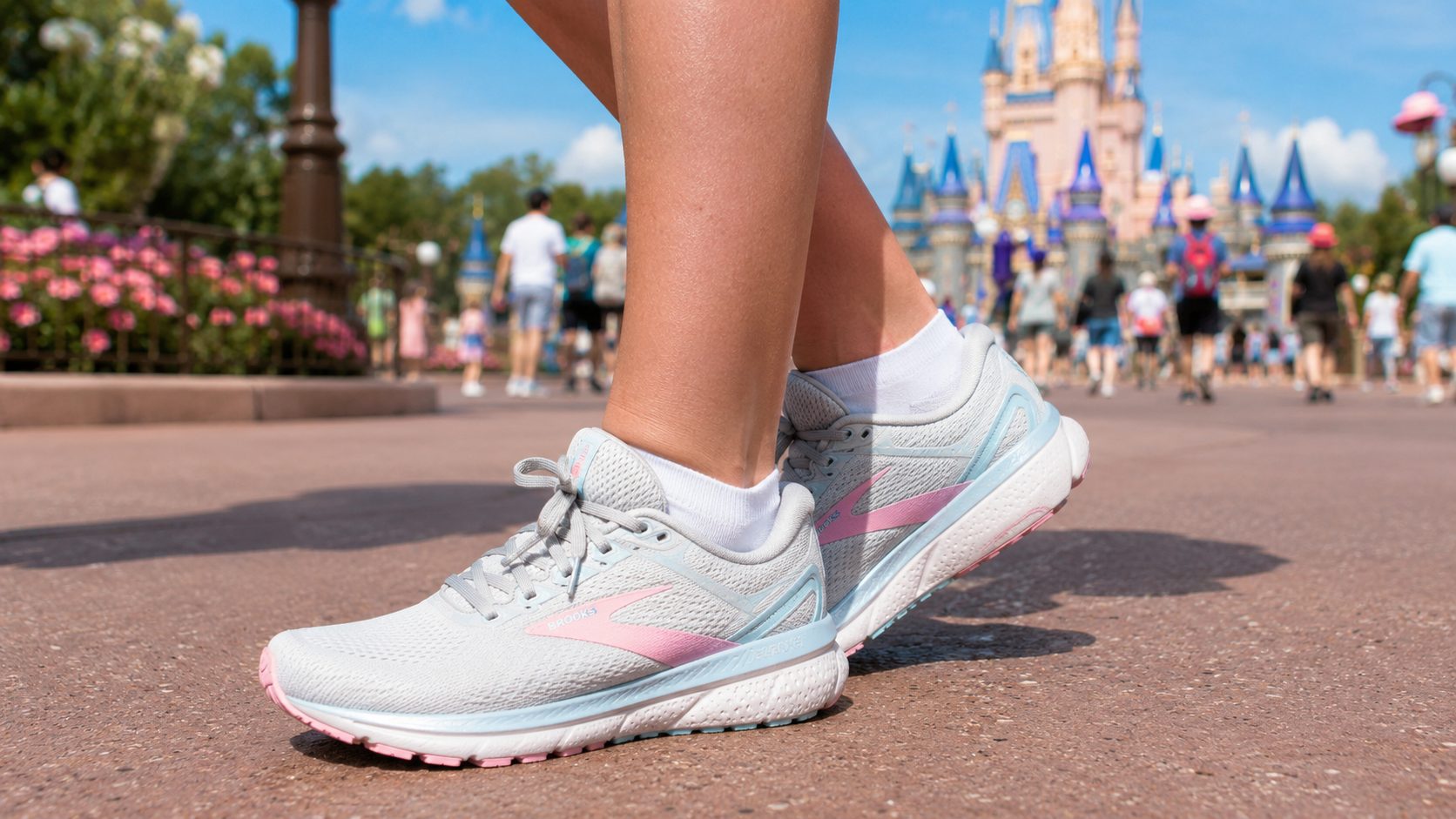
Shoes are everything. More Disney days are ruined by the wrong footwear than by crowds, weather, or any other factor. You will walk between 8 and 12 miles at Walt Disney World and 5 to 8 miles at Disneyland. Wear athletic sneakers or walking shoes that you have broken in — not new, not fashionable-but-uncomfortable, not sandals. Your shoes should feel unremarkable after six hours of walking.
Walt Disney World — by season
Summer (June through August). Orlando in summer is genuinely hot and humid. Expect temperatures in the upper 80s to mid-90s Fahrenheit with humidity that makes it feel hotter. Afternoon thunderstorms hit almost every day, typically between 2 and 5 PM.
What works: lightweight, moisture-wicking fabrics in light colors. Athletic wear is completely appropriate. Avoid denim — it's heavy, doesn't breathe, and dries slowly when wet. A light layer for indoor rides and restaurants is worth bringing — Disney's air-conditioned attractions can feel genuinely cold after time in the Florida heat.
Keep a packable poncho in your bag. The afternoon rain is predictable enough to prepare for without wearing rain gear all day.
Fall (September through November). September is still summer in Florida. October brings gradually cooling temperatures, with evenings becoming comfortable by mid-month. November is generally pleasant with daytime temperatures in the 70s Fahrenheit.
During Mickey's Not-So-Scary Halloween Party, guests may wear costumes following Disney's event costume guidelines — no full masks, no weapons or props that could be mistaken for real items, no costumes that drag on the ground.
Winter (December through February). Florida winters are mild by most standards but cooler than guests from warmer climates expect. December and January evenings can drop into the 50s Fahrenheit. A light jacket is not optional for evening park visits. Daytime in winter is often beautiful — mid-60s to low 70s with low humidity and clear skies.
Spring (March through May). March and April are the best weather months at Walt Disney World — temperatures in the 70s and 80s with lower humidity than summer. By May, summer conditions are beginning to establish themselves. Layers that come off easily are useful as mornings can start cool.
Disneyland — by season
Disneyland's climate is fundamentally different from Walt Disney World's. Anaheim has a Mediterranean climate — mild year-round, dry summers, occasional winter rain, and a marine layer that creates cool mornings even in July.
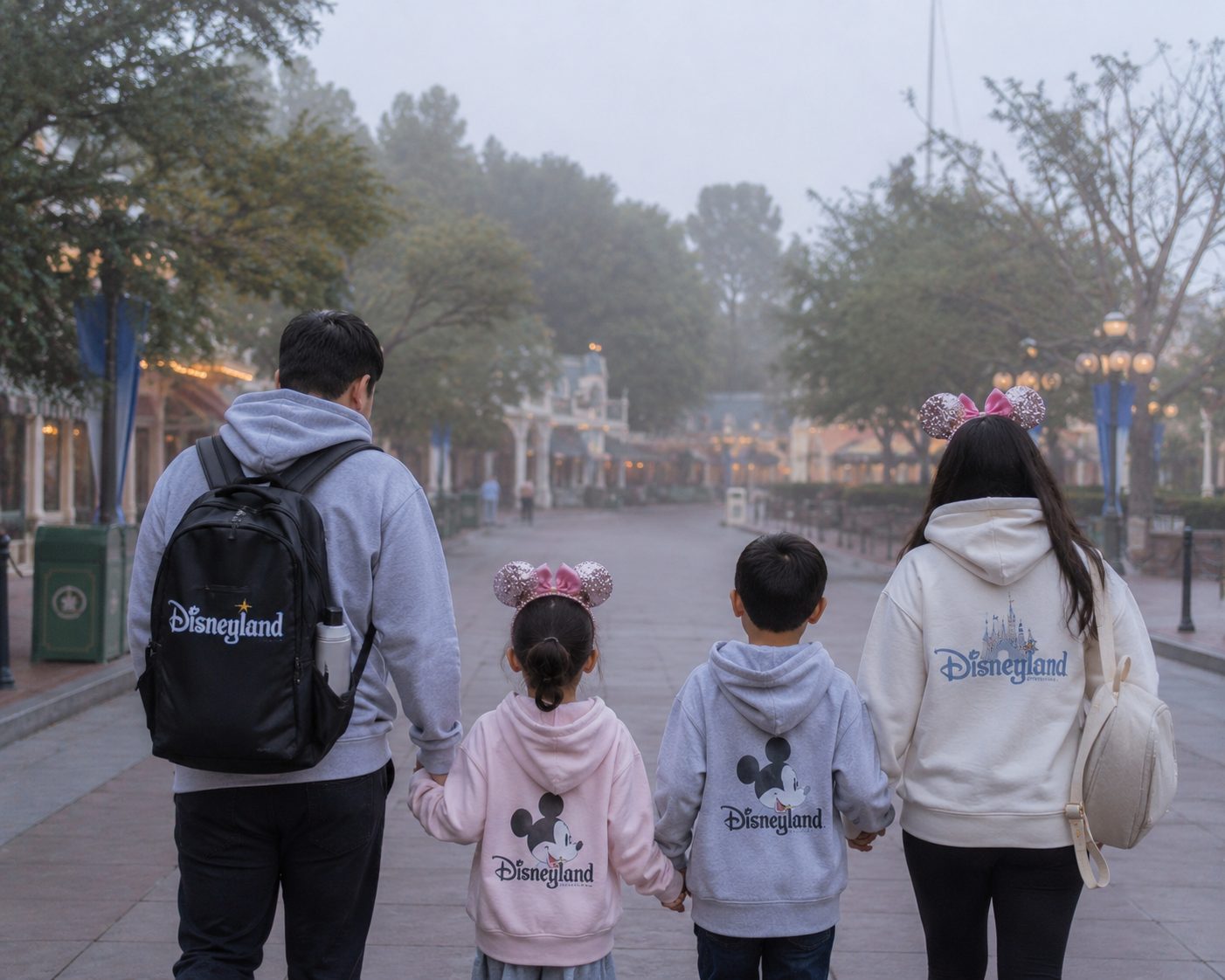
Summer (June through August). Disneyland summers are warm but not aggressively hot the way Orlando is. Daytime temperatures typically reach the mid-80s Fahrenheit. What catches people off guard: mornings are genuinely cool — sometimes in the low 60s — thanks to marine layer that burns off by late morning.
The standard Disneyland summer outfit: a t-shirt with a light jacket or zip-up hoodie for the morning. By 10 or 11 AM you'll be tying the jacket around your waist. Rain is rare in summer.
Fall (September through November). September and October at Disneyland are genuinely the best weather months — warm afternoons, cool mornings. October evenings can be cool enough that a jacket feels necessary after dark. Oogie Boogie Bash at DCA encourages costumes for all ages.
Winter (December through February). January mornings at Disneyland can drop into the upper 40s Fahrenheit. A real jacket — not just a hoodie — is worth packing for winter visits. Rain is possible in January and February. Keep a packable rain layer in your bag.
Spring (March through May). Beautiful. Temperatures are comfortable and the marine layer morning-to-afternoon pattern returns. Light layers again.
Disney bounding
Disney bounding is the practice of dressing to evoke a specific Disney character using regular clothing rather than a costume — Mickey's colors (black, red, yellow), Cinderella's blue dress translated into a blue sundress and silver accessories, and so on. It's popular among adults who want to engage with the Disney atmosphere without wearing full costumes, which are not permitted for adult guests during regular park hours. The most successful Disney bounding outfits are built around comfortable shoes and breathable fabrics first.
What to avoid
New shoes. The number one avoidable mistake.
Denim in summer. Heavy, hot, and slow to dry if you get wet.
Heels or dress shoes. Even for an upscale dining reservation, comfortable dress shoes are the maximum.
Full adult costumes during regular park hours. Disney's policy prohibits adult guests (14 and older) from wearing costumes or costume-like attire during regular park hours. This is enforced at the gate.
Quick seasonal reference
- WDW summer: Lightweight moisture-wicking fabrics, light colors, poncho in bag, indoor layer
- WDW fall/spring: Light layers, comfortable fabrics, evening jacket in October and November
- WDW winter: Light jacket for mornings and evenings, layers that shed by midday
- DL summer: T-shirt plus hoodie for morning, light colors, no rain needed
- DL fall: Same as summer, real jacket for October evenings
- DL winter: Real jacket required, rain layer in bag, layers throughout

More magic.
Theme Park Co-Pilot helps you plan every detail of your Disney day — from what to wear to which rides to hit first based on live wait times.
Try free for 7 days →Frequently asked questions